
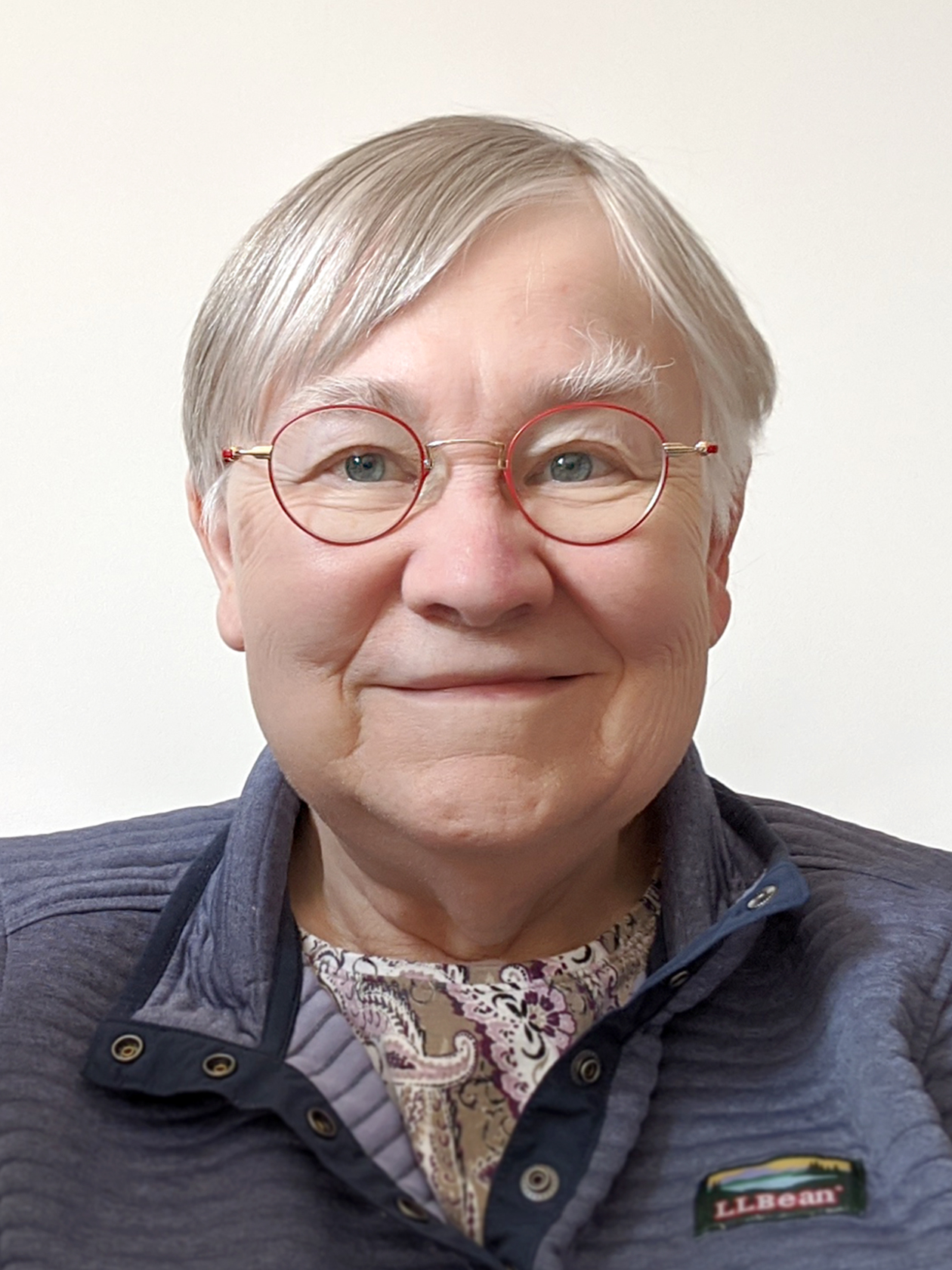
Portland – Dr. Nancy Seward Horie, 93, died on March 21, 2026, in Portland with the same agency, graciousness, and keen intellect with which she lived her life.
Nancy was born in Lewiston in 1932, to Barbara (Bosworth) and Robert D. Seward, a professor of French, Spanish, and Russian at Bates College. Her early childhood was one of unfettered bike rides, lots of singing, fresh buttered bread, family dinners with guests from all over the world, and a few dusty bus trips to Mexico in the summer, where her father did research at the National Library of Mexico.
Her life trajectory followed that of modern medicine. The 1930s was the age of vaccine development for common diseases like tetanus and diphtheria, though well before the mass production of antibiotics. Nancy was interested in medicine from a young age, volunteering as a candy striper at Central Maine General Hospital (now CMMC). She went on to receive a BS from the University of Rochester, an MS in chemistry from Wayne State University, and an MD from Tufts Medical School in 1960, where typically 5% of graduates were women.
The next year she met her future husband, Tsukasa Horie, MD, when they locked eyes over a tuberculosis patient in the infectious disease ward at Henry Ford Hospital in Detroit, where they both did their residencies. They married five months later and spent the next decade traveling back and forth between Tokyo and Maine, during which Nancy worked for three years as an anesthesiologist at St. Luke’s Hospital in Tokyo. After working at the Maine Medical Center in Portland and St. Mary’s Hospital in Lewiston, she co-founded Anesthesia Associates in Lewiston and returned to CMMC to practice for the next forty years. Indeed, even into her nineties, she took immense pleasure in reading about new scientific discoveries and pondering things like AI. Science was so marvelous to her that she spoke poetically of her body returning to molecules floating around again after she died.
Nancy was known for the humanity and compassion that she brought to her work, especially in the way she prioritized the inherent dignity of her patients. Her humility and disinterest in status was evident in the way she responded to those who mistook her for the janitor in the hallways of the hospital – she simply smiled and shrugged her shoulders. When asked why she chose anesthesia over other branches, Nancy replied, “because I don’t like to see people in pain.”
After having their only child, Ayumi, Nancy and Tsukasa moved back permanently to Maine, with their multicultural, multigenerational extended Japanese family. By that time, Nancy had a working knowledge of Japanese and her immersion in Japanese culture fit right into her deep curiosity about pretty much everything. She adored Japan and had to be extracted from the country during an extended visit as the COVID pandemic started, because she saw no need to leave her beloved routines in Tokyo, like watching sumo or exploring new neighborhoods. While her love of Japan came in adulthood, her love of Maine was there from the start. With ancestors in Maine since the 1600s, her love of her home state was a given and she would always belt out the “Grand State of Maine” song whenever she drove across the bridge from New Hampshire to Maine. After retirement in 1999, she and Tsukasa traveled for fifteen years on birding trips all over the world, from Svalbard to Papua New Guinea to Easter Island and many places in between. These were some of the happiest years of her life.
As the human reference desk for family and friends before the Internet, Nancy would immediately page through reference books to figure out the correct answer, if she didn’t already know it. Nancy was often the smartest person in the room, without being a know-it-all, because she simply loved to learn and think through big ideas, like questions about human nature. Disinformation was particularly troubling to her because it violated her deep-rooted belief in verifiable facts and the goodness of people.
When her daughter was a child, Nancy was a warm and cozy pillow, who read her to sleep every night. Later in life, she read to her three grandchildren for hours on end and alphabet books were of special interest. A huge portion of her overflowing bookcase were books about the quirks of the English language, the development of language, lexicons, and of course, poetry. Because she loved to unravel a problem, she was particularly fond of word puzzles, math puzzles, and mystery books. She loved science fiction because it imagined new possibilities. Throughout her life, she read five or six books concurrently. She also loved e-books when they became available, because she felt she could bring whole libraries with her wherever she went.
Nancy was dependable, practical, and unflappable. When she self-diagnosed herself with appendicitis, she calculated that she had enough time to take a shower and pack her bags before heading to the hospital. She was funny, easy-going, kind, and uncritical, though she did complain about Brussels sprouts and kale if they appeared on her plate at family dinners. She also preferred to call a green salad “leaves.” She was a loving and supportive mother, aunt, sister, and grandmother, who gave the best bear hugs. She was never one to hold grudges and her enthusiasm was contagious. Everyone who knew Nancy was encouraged by her positivity, cheerfulness, and generosity. She remained 90% hopeful that humans would course correct.
Her most cherished friendship was with Eleanor (Zerby) Blankenbaker, her best friend, and fellow Bates faculty kid. Nancy and Eleanor would say that since their pregnant mothers were friends, their relationship began in utero and continued for 93 ½ years. When they talked on the phone the day before Nancy died, one thing that they reminisced about was how they loved to hear Nancy’s father sing French folk songs and sea shanties to them as children.
Dr. Nancy S. Horie was predeceased by her husband, Dr. Tsukasa Horie; parents, Barbara (Bosworth) and Robert Seward; sister, Susanna Chatametikool; and nephew, Alexander Nishimura. She is survived by her daughter, Ayumi Horie and her wife, Chloe Beaven Horie; grandchildren Shio, Atsuki, and Tosa Horie; nieces, Chieko Shiraoka, Ryuko Horie Doscher, Barbara Chatametikool, and Malee Irving; and nephews, Shizuta Ishikawa, Masaharu Ishikawa, Yoshihiro Ooka, Nobuo Ooka, Takeyoshi Horie, Hideki Fukuda, and Lee Chatametikool.
A Gathering will be held from 2pm – 3pm followed by a Celebration of Life at 3pm on Saturday, April 25, 2026, at the new Conroy-Tully Walker, Cremations, Funerals & Gathering Center, 300 Allen Ave., Portland, Maine 04103. Feel free to dress cheerfully.
In lieu of flowers, the family greatly appreciates donations made to the newly established Nancy S. Horie Library Fund at the Portland Public Library, 5 Monument Sq., Portland, Maine, 04101, which will continue her legacy of curiosity, cultivating a love of reading, and doing good in the world through knowledge and a big heart.
Services
Gathering : Saturday, April 25, 2026 2:00 pm - 3:00 pm
Conroy-Tully Walker Cremation, Funeral & Gathering Center
300 Allen Avenue
Portland, Maine 04103
Add to My Calendar
America/New_York
2026-04-25 14:00:00
2026-04-25 03:00:00
NancySewardHorieGathering
Gathering
300 Allen Avenue,Portland, Maine 04103
Celebration of Life: Saturday, April 25, 2026 3:00 pm
Conroy-Tully Walker Cremation, Funeral & Gathering Center
300 Allen Avenue
Portland, Maine 04103
Add to My Calendar
America/New_York
2026-04-25 15:00:00
2026-04-25 15:00:00
NancySewardHorieCelebration of Life
Celebration of Life
300 Allen Avenue,Portland, Maine 04103
View current weather.
Memories Timeline
Guestbook
Sign the Guestbook, Light a Candle








Dr. Horie will always be lodged in my memory as one of the smartest, kindest, and most generous of humans. My dad, another founding member of Anesthesia Associates (initially, Marshall, Tibbetts, & Horie) once remarked that Nancy had one of the most brilliant minds of anyone he knew. She also had an uncanny knack for bringing just a little something whenever she visited, typically a book, which when I was a child, made a huge impression on me. Two of my absolute favorite children’s books were gifts she brought me when visiting my folks. I regret not being able to see her in person one last time. However, I have a feeling that her molecules floating around are aware how she was so admired. Sending much love to her family, and her beloved friends, of which she had so many. Thank you for this beautiful tribute to her beautiful life!
Thank you so much, Katherine. I’m not surprised that she always had a book in hand and am so pleased it hear that two of your favorites came from her. I’d be curious to know what they were! Hope to cross paths again sometime and send my best to your mother.
They were:
It’s Raining Said John Twaining
and
The Funny Little Woman – the cover of this was particularly memorable.
I loved them so much. I still have them, packed away. I read them to my kids when they were little.
For 50 years Dr. Nancy has been so many things to us, employer, mentor, landlord, advisor and friend, we worked for and with her for 23 years at CMMC and the next 27 years after her retirement we kept in touch mostly sharing our family events. She was an avid reader and traveler both of those she passed on to us. We will miss sharing our family events with her by cards and visits. Remarkable Doctor, Woman, Friend, Person.
Bruce and Irene
Thanks very much for this remembrance of my mother. It’s so kind of you both.
My husband’s mother, Mary Gallant, spoke only good things about her time as a CRNA with the Hories.
Our condolences to Dr Horie’s family. Such a beautiful obituary.
Thank you. I remember my mother saying the same things about Mary!
CMGH/CMMC/MCHP Alumni Association members offer their sincere condolences. Very impressive obituary!
Thank you so much.
Ayumi –
This is the most beautiful obituary I have ever read! What an amazing life she lived. My dad, Roy Coburn, adored and respected her immensely. I still remember the trinkets and knick-knacks from Japan that she would give my dad to bring home to me and my brother. CMMC and our community were fortunate to have her! May your memories of her stay vivid in your mind, always.
~Becki Mastrianno
Ayumi,
I enjoyed my time with your Mom over the years. I loved listening to her stories while we sorted through things at the house. She always made me laugh. She’ll be greatly missed.
Nicki